

Science causes more confusion at GCSE level than almost any other subject, and not because the content itself is unusually difficult. The confusion starts earlier than revision. Many students reach Year 10 without fully understanding whether they are doing Combined Science or Triple Science, what the actual difference is, how many exams that means they are sitting, or how revision should be structured differently because of it. That confusion follows them straight into Year 11, where it quietly costs marks that have nothing to do with how well they understand photosynthesis or electrolysis. This guide clears that up first, then gets into what actually works for revising GCSE Science, whichever path a student is on. Combined Science vs Triple Science: Understanding What You Are Actually Studying What Is GCSE Combined Science? GCSE Combined Science is a single qualification that covers Biology, Chemistry, and Physics together, resulting in two GCSE grades rather than three. Students study content from all three sciences but at a reduced depth compared to Triple Science, and they sit fewer exam papers overall. Most schools award two grades for Combined Science, sometimes shown as a double grade like “7-7”, reflecting performance across the combined content. The qualification still covers a genuinely broad range of scientific knowledge, but the volume of content per subject is less than what Triple Science students cover. What Is GCSE Triple Science? GCSE Triple Science means studying Biology, Chemistry, and Physics as three entirely separate GCSE qualifications, each with its own grade. Students sitting Triple Science cover significantly more content in each subject — including topics that do not appear in the Combined Science specification at all — and sit six exam papers in total rather than the typically four or six papers (depending on board) for Combined Science. Triple Science is generally considered better preparation for A-Level sciences, particularly for students planning to continue with more than one science subject. The additional depth and the separate qualifications also tend to be viewed favourably by competitive sixth forms and university programmes in science-related fields. Combined Science or Triple Science: Which One Are You Revising For? This distinction matters enormously for revision, because the specification content, the exam structure, and even some of the topics differ between the two pathways. A student revising from Triple Science Biology resources when they are actually sitting Combined Science Biology will spend time on content that will not appear in their exam, while potentially missing emphasis on areas that Combined Science weighs differently. Before starting any structured revision, confirm exactly which pathway applies and download the correct specification document from the relevant exam board. AQA, Edexcel, or OCR are the most common in the UK system. Every revision resource used afterward should be checked against that specification. AQA GCSE Science, Edexcel GCSE Science and OCR, Why the Board Matters Beyond the Combined vs Triple distinction, the specific exam board adds another layer that affects revision. How AQA GCSE Science Differs From Edexcel and OCR AQA, Edexcel, and OCR all assess Biology, Chemistry, and Physics to a broadly similar standard, but the specification content, paper structures, and required practicals differ in detail. AQA Combined Science, for example, is called Trilogy, and its specification groups topics slightly differently from Edexcel’s equivalent. Required practicals, a list of specific experiments that students must have carried out during the course, also vary by board and frequently appear as the basis for exam questions. A student who has done their required practicals but cannot recall the specific methodology, variables, and sources of error involved is likely to lose marks on the practical-based questions that appear consistently across all three boards’ papers. The practical takeaway: identify the board, download that board’s specification and list of required practicals, and revise the practical methodology as deliberately as the theoretical content. Exam questions frequently ask students to evaluate a method, identify a control variable, or suggest an improvement to an experiment, and these questions are answerable only by students who have actually engaged with the required practicals, not just read about them. GCSE Combined Science: How to Structure Revision Across Three Subjects Revising for Combined Science means managing three subjects within a more condensed specification, sitting fewer but still substantial exam papers. The challenge is breadth without losing depth in any one area. Working with an experienced GCSE Combined Science tutor can help students balance revision across all three disciplines without falling behind in any single area. Allocating Revision Time Across Biology, Chemistry and Physics A common mistake in Combined Science revision is spending disproportionate time on the science the student finds most comfortable and avoiding the one they find hardest. Since all three subjects contribute to the same overall grade, weaknesses in one area drag down the entire result regardless of strength in the others. The more effective approach allocates revision time based on a combination of how many marks each topic area typically carries and how confident the student currently is in it, meaning more time goes to weak areas with high mark value, not to the subject that feels most pleasant to revise. Topic Priorities for GCSE Combined Science Across AQA, Edexcel, and OCR Combined Science specifications, certain topic areas consistently carry significant marks and deserve focused attention: In Biology: cell biology, organisation and the digestive system, infection and response, and ecology appear consistently and carry substantial marks across past papers. If topics like genetics or cellular respiration feel overwhelming, targeted guidance from a GCSE Biology tutor helps build core recall quickly. In Chemistry: atomic structure and the periodic table, bonding, and chemical changes, including reactivity and electrolysis, are heavily tested areas. For students struggling with multi-step calculations or equation balancing, an expert GCSE Chemistry tutor ensures these foundational concepts are secure. In Physics: energy, forces, and electricity form the backbone of most papers and connect to several other topic areas, making them worth mastering early. Partnering with a GCSE Physics tutor helps students practice applying equations under exam conditions. Students who build strong […]
Monthly Archives: June 2026
Jun
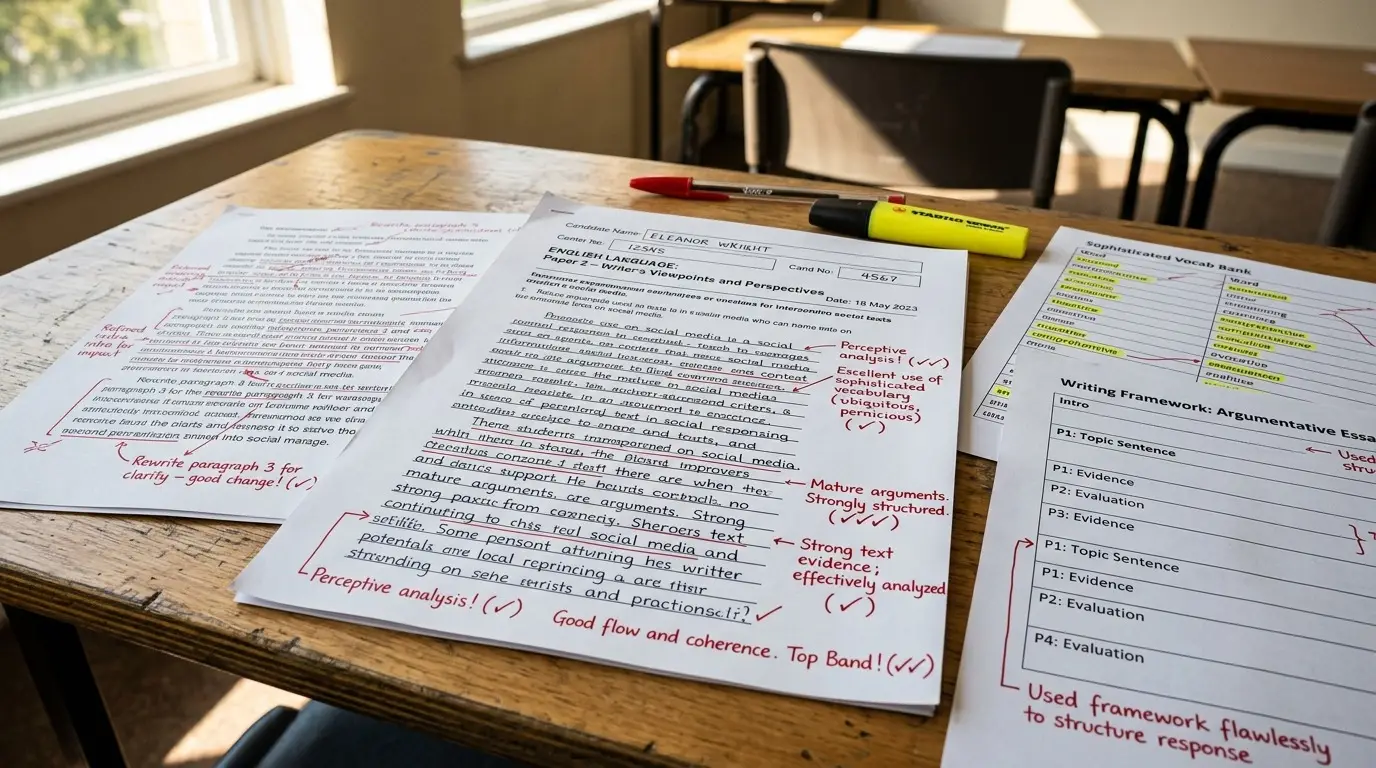
English Language is the subject almost every student takes and surprisingly few feel truly confident about. That is not because it is the hardest subject on the timetable. It is because it is one of the least understood. Students spend years being told to “write better” or “read more carefully” without ever being shown specifically what those phrases mean in the context of an exam that has clear mark schemes, defined band descriptors, and very particular ideas about what a top-band response looks like. The result is that a huge number of capable students sit GCSE English Language papers and come out with grades that do not reflect their actual ability, not because they cannot write, but because nobody explained what the examiner was actually looking for. This guide does that. It covers every paper, every skill type, and the specific habits that separate students who score in the top bands from those who understand the subject but cannot quite show it when it counts. Understanding GCSE English Language: What the Subject Actually Tests Before looking at individual papers, it helps to understand what GCSE English Language is fundamentally assessing, because the answer is more specific than most students realise. GCSE English Language does not test how much a student knows. It tests what a student can do with language, as a reader and as a writer. Every question on every paper is assessing one or more of these core skills: Reading carefully and selectively, finding relevant information and understanding what it implies Analysing how writers use language, explaining the effect of specific choices, not just what the text says Writing for different purposes and audiences, producing controlled, purposeful writing in different forms Structuring and organising writing effectively, demonstrating that structural choices are deliberate rather than accidental The mark scheme rewards students who demonstrate these skills explicitly and consistently. A student who reads well but writes vaguely will plateau. A student who writes fluently but does not engage carefully with reading questions will leave significant marks on the table. Both sides of the subject require specific attention, and both reward specific preparation habits. AQA GCSE English vs Edexcel GCSE English, Know Your Board First The first practical step in GCSE English Language revision is knowing exactly which board and which papers apply. AQA GCSE English Language is the most widely sat version in the UK. It has two papers, Paper 1 focuses on fiction reading and creative writing, Paper 2 focuses on non-fiction reading and transactional writing. Both papers carry equal weighting. Edexcel GCSE English Language has a different structure. Component 1 assesses fiction and imaginative writing. Component 2 assesses non-fiction reading and transactional writing. Edexcel also has a spoken language endorsement that is assessed separately and reported alongside the main grade. AQA and Edexcel assess similar skills but through different question formats, different text types, and different mark scheme emphases. A student who revises using AQA past papers and sits the Edexcel exam — or vice versa — will find the question styles unfamiliar in ways that cost marks. Get the board right before anything else. Every past paper, every mark scheme, and every examiner report used in revision should come from the correct board. GCSE English Language Paper 1: Fiction Reading and Creative Writing What GCSE English Language Paper 1 Actually Tests Paper 1 in both AQA and Edexcel structures assesses two distinct skill areas: reading a fiction or literary non-fiction extract and responding to questions about it, then producing a piece of creative writing. For most students, the creative writing section feels more natural and receives more revision attention. The reading section, which carries significant marks, is often underrevised because students assume that if they understood the passage, they can answer questions about it adequately. That assumption is where marks are quietly lost. GCSE English Language Paper 1 Reading: What Examiners Look For Reading questions on Paper 1 test increasingly sophisticated skills as they progress through the paper. Earlier questions tend to test basic retrieval and identification. Later questions test analysis of language, structure, and the writer’s craft. The most marks, and the biggest grade differences, sit in the analysis questions. These ask students to explain how a writer uses language or structure to achieve a particular effect. The difference between a mid-band and a top-band response to these questions is almost entirely about whether the student writes about the writer’s choices and their effect, or simply describes what the text says. Here is the distinction in practice: Mid-band response: “The writer uses the word ‘thunderous’ to describe the noise. This shows it was very loud.” Top-band response: “The writer’s choice of ‘thunderous’ evokes a sense of overwhelming, almost violent sound, suggesting the noise is not merely loud but threatening, as if nature itself is asserting dominance over the characters.” The second response is not longer for the sake of it. It is more analytical — it explains what the word choice does to the reader rather than just what it means. That analytical habit is what top-band mark schemes reward, and it is a learnable skill that develops through deliberate practice, not through reading more fiction. Creative Writing in GCSE English Language Paper 1: What Actually Gets Marks Creative writing is assessed on two broad criteria: communication, organization, and technical accuracy. Both matter, but students tend to focus on content (what happens in the story) and neglect craft (how the writing works). The most common mistake in GCSE creative writing is writing a story with an interesting plot but weak writing. Examiners are not marking the plot. They are marking the language. A piece of writing that uses varied sentence structures deliberately, chooses words with precision, controls the pace of narrative, and uses structural features like non-linear time or repeated motifs, even if the storyline is very simple, will outscore a piece with an exciting plot written in flat, undifferentiated prose. Specific habits that move creative writing grades up: Vary sentence length deliberately; a single […]

Jun
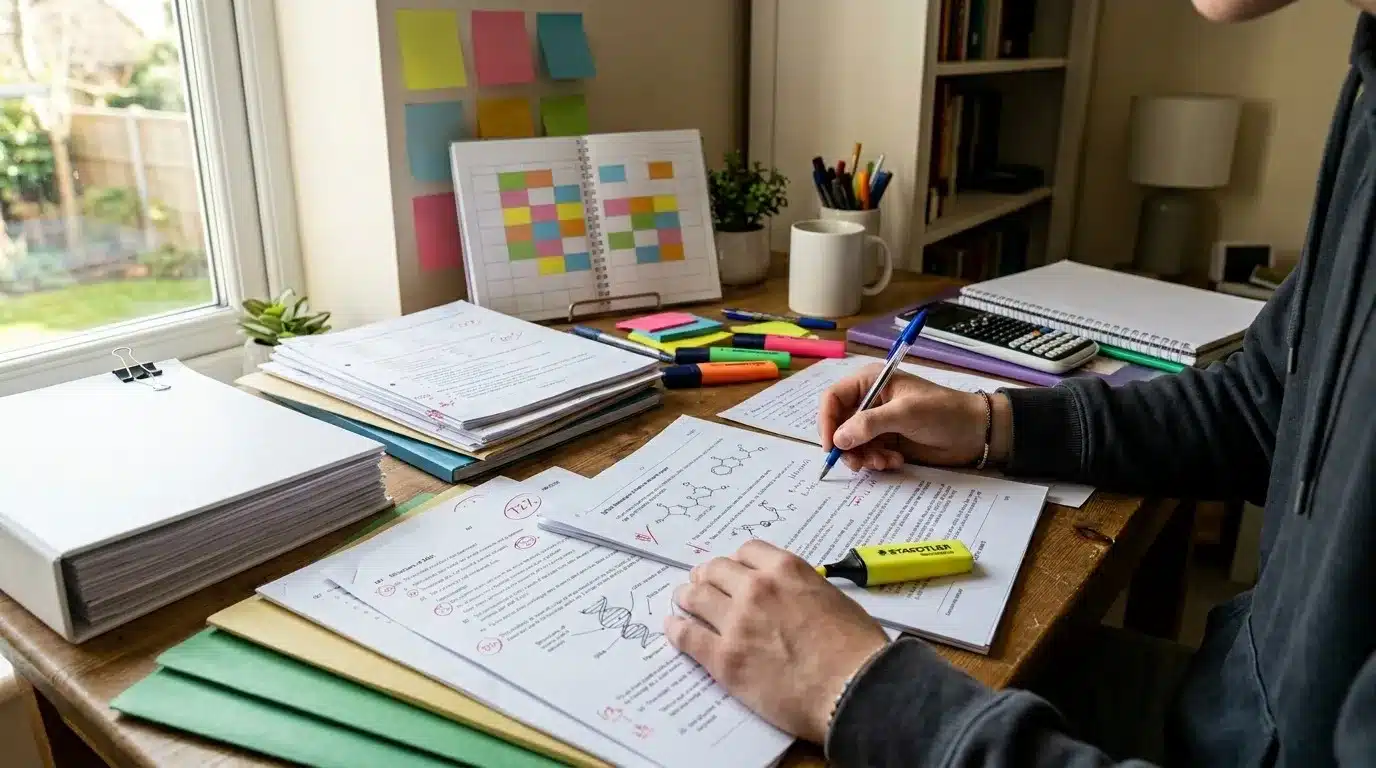
Most GCSE revision advice is the same advice repackaged. Make flashcards. Use colour-coded notes. Revise somewhere quiet. These things are not wrong, but they are so general they barely help. A student who is genuinely struggling to improve their grades does not need another reminder to revise somewhere quiet. They need to understand why what they are currently doing is not working, and what to do differently. That is what this guide is actually about. Not a list of vague suggestions, but a specific, honest breakdown of the revision methods that consistently produce grade improvements, and the ones that feel productive without being productive. The difference between those two categories is where most GCSE results are won or lost. Why Most GCSE Revision Does Not Work Before getting into what works, it is worth being honest about what does not, because most students spend the majority of their revision time on methods that research and exam results consistently show to be ineffective. Re-reading notes is the most common revision activity and one of the least effective. It creates a feeling of familiarity with the material that students often mistake for understanding. But recognising information when you see it is not the same as being able to retrieve it in an exam hall with nothing in front of you. Re-reading builds recognition. Exams test retrieval. Those are different skills. Highlighting has the same problem. A page covered in four colours of highlighter feels like evidence of work done. It rarely is. If a student cannot explain what they highlighted without looking at it, the highlighting has not helped them learn it. Passive note-taking, copying out textbook sections into neater handwriting, is perhaps the most time-consuming form of revision that produces the least return. The act of copying does not require understanding. A student can copy a paragraph about enzyme action perfectly without understanding a word of it. Understanding why these methods underperform is the foundation of better revision, because once a student sees the pattern, they stop defending habits that are not working. What the Evidence Actually Says About GCSE Revision Techniques Two revision techniques are consistently supported by research as the most effective for long-term retention and exam performance. Everything else in this guide builds on them. Active Recall Revision: The Most Powerful GCSE Study Method Active recall is the practice of retrieving information from memory without looking at notes or textbooks. Testing yourself, attempting to remember something before checking whether you were right, is fundamentally more effective than re-reading, because retrieval itself strengthens the memory in a way that passive review does not. In practice, active recall revision looks like: Closing notes and trying to write down everything remembered about a topic Using flashcards with a question on one side and the answer on the other, and genuinely testing before flipping Attempting past paper questions from memory rather than with notes open Explaining a concept out loud as if teaching it to someone else , which forces the retrieval that silent re-reading does not The discomfort of not immediately knowing an answer during active recall practice is not a sign that the method is not working. It is the method working. That moment of struggle before successful retrieval is what builds the memory trace that survives to exam day. Spaced Repetition GCSE: Why Timing Matters as Much as Method Spaced repetition is the practice of revisiting material at increasing intervals rather than covering it once and moving on. Research consistently shows that information revisited after a delay, rather than immediately, is retained significantly better over time. In practical terms, spaced repetition GCSE revision means: Revisiting topics studied a week ago, not just topics studied yesterday Building a revision schedule that cycles back through earlier material rather than progressing linearly through the syllabus and never returning Using flashcard apps that automate the spacing, showing cards more frequently when they are being got wrong and less frequently as they become secure Planning revision across the full revision period with deliberate gaps between passes through each topic The combination of active recall and spaced repetition is the most evidence-supported foundation for GCSE revision. Everything else in this guide works better when it is built on these two habits. GCSE Revision Schedule: How to Build One That Actually Gets Used A revision schedule that looks impressive on paper but gets abandoned by the second week is worse than no schedule at all, because the student loses time creating it and then feels guilty rather than productive when it falls apart. How to Build a Realistic GCSE Revision Timetable Here is how to build a revision timetable that actually holds: Start with what is fixed. School hours, sports commitments, family events, and anything else that cannot move goes in first. This is the real skeleton of the week — not an ideal version of it. Be honest about available time. Most students overestimate how many hours of effective revision they can sustain in a day. Two hours of focused, active revision is more productive than five hours of unfocused, passive revision. Build a schedule based on focused hours, not total hours at a desk. Allocate subjects based on need, not preference. Students naturally gravitate toward revising subjects they already find easy and avoiding the ones they struggle with. A GCSE revision schedule should do the opposite, more time to weaker subjects and less to stronger ones, while maintaining some presence of every subject throughout. Build in review sessions. For every new topic covered, schedule a review of that topic one week later and again three weeks after that. This is spaced repetition built directly into the timetable rather than left to chance. Leave buffer space. A schedule with no slack breaks the moment one session runs long or one day goes differently than planned. Building in one free revision slot per week, available to cover anything that fell behind, makes the whole schedule more resilient. GCSE Revision Timetable, When to Start This is […]
Jun
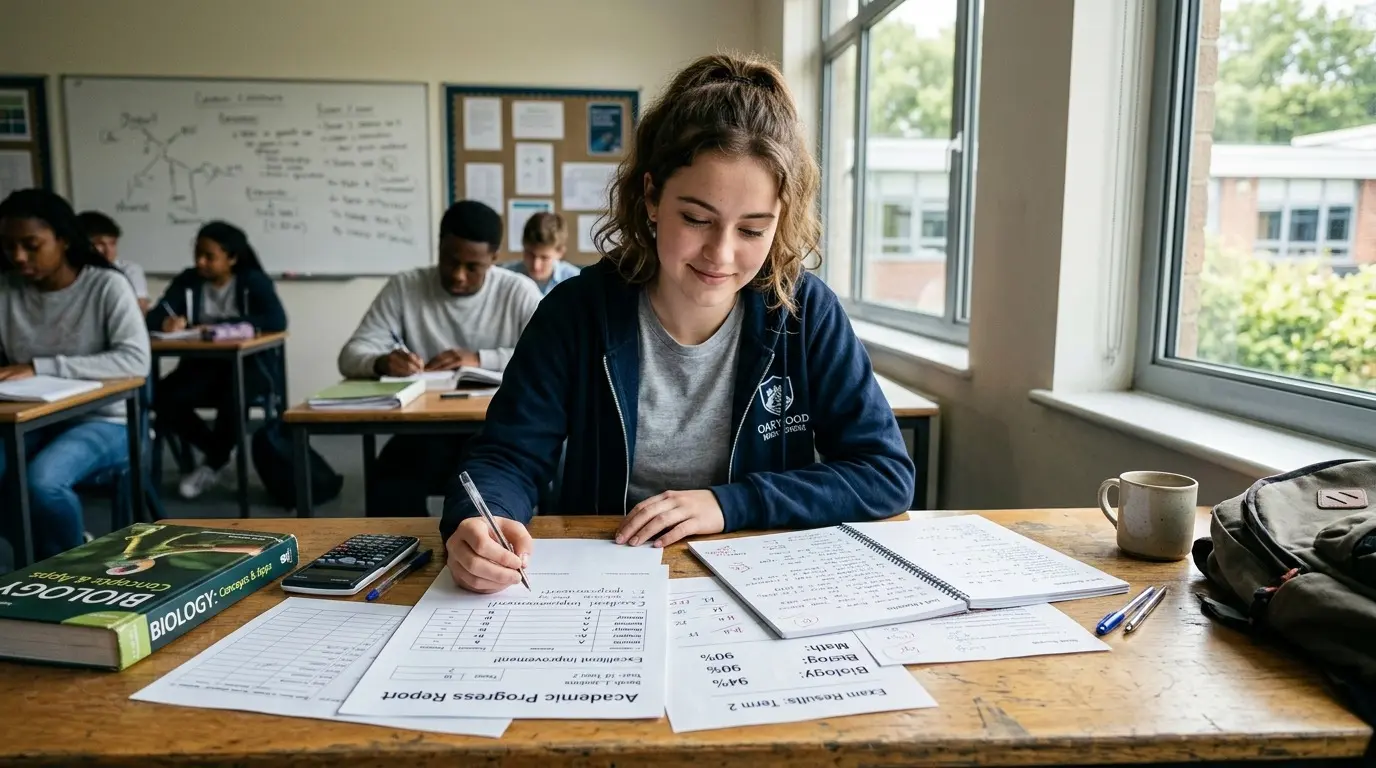
Most students know their GCSE results matter. Fewer understand exactly what the numbers on their results slip actually mean, and what counts as a good grade versus a grade that creates problems for the next stage. That gap between knowing grades matter and understanding what they mean is more common than schools tend to acknowledge. A student who gets a 5 in Maths might feel relieved, only to discover that the sixth form they want requires a 6. A student who gets a 7 in English might feel quietly disappointed, not realising that a 7 is a strong result that most universities regard very favourably. This guide settles the confusion properly. It explains the GCSE 9-1 grading system clearly, what each grade actually represents, where the important thresholds sit, and what counts as a good GCSE grade depending on what a student wants to do next. GCSE Grades Explained: How the 9-1 System Works The current GCSE grading system uses numbers from 9 at the top to 1 at the bottom, replacing the old A* to G lettered scale that was used until 2017. Understanding how the two systems relate to each other helps make sense of what each number grade actually represents in practice. GCSE Number Grades: The Full Scale Explained Here is the complete GCSE grading system with the old letter grade equivalents: GCSE 9-1 Grade Old Letter Grade Equivalent What It Broadly Represents 9 Above A* Exceptional performance, top few percent nationally 8 A* / high A Outstanding performance 7 A Strong performance, well above average 6 High B Good performance, above average 5 Low B / high C Standard pass, solid performance 4 C Standard pass, meets the basic threshold 3 D Below standard pass 2 E Well below standard pass 1 F/G Minimum grade awarded U U Ungraded, below the minimum standard One important distinction: grades 4 and 5 are both considered passes, but they mean different things in practice. A grade 4 is the minimum standard pass, what the government defines as an acceptable level of achievement. A grade 5 is a strong pass, a higher threshold that many sixth forms, colleges, and competitive programmes use as their minimum requirement. This distinction between a 4 and a 5 is one of the most practically significant things a student and parent can understand about the GCSE grading system. GCSE Grade 4 Pass: What It Means and When It Matters What Does GCSE Grade 4 Mean in Practice? A grade 4 is officially described as a standard pass. It is the minimum grade that satisfies the GCSE requirement for school performance measures and is what the government uses as the benchmark for acceptable performance in English and Mathematics. In practical terms, a grade 4 in English Language and a grade 4 in Mathematics means a student has met the minimum threshold that most post-16 pathways require. Students who do not achieve a grade 4 in English or Maths are typically required to resit those subjects in sixth form or college, which adds significant pressure to an already demanding period. When Grade 4 Is Not Enough While grade 4 is the official minimum pass, many pathways require more than the minimum: Competitive sixth forms and colleges: most selective sixth forms set their own entry requirements above the government minimum. Grade 5 or above in English and Maths is common, with subject-specific requirements often higher still Specific A-Level subjects: many A-Level subjects have informal or formal GCSE prerequisites. A-Level Chemistry typically expects at least a grade 6 in GCSE Chemistry or Combined Science. A-Level Mathematics expects at least a grade 6 in GCSE Maths, with many schools preferring a 7 Apprenticeships and vocational programmes: many higher-level apprenticeships require grade 4 or above in English and Maths as a minimum condition of entry Knowing where the grade 4 threshold sits, and where it is not sufficient, is important context for understanding what revision effort is actually required in each subject. GCSE Grade 9: What It Means and How Rare It Actually Is What Is a Grade 9 in GCSE? Grade 9 is the highest grade available in the GCSE 9-1 system. It was introduced specifically to differentiate the very highest performers from the broader A* group in the old system, recognising that within the old A* category, there was significant variation in performance that the single grade did not capture. In the old system, approximately 8% of results in a given subject were awarded A*. Under the 9-1 system, grade 9 is awarded to a smaller proportion, roughly the top 3 to 4% of results in most subjects, calculated using a formula that takes into account the distribution of marks across the cohort. This means grade 9 is genuinely exceptional. A student who achieves grade 9 is not just performing well, they are performing at a level that places them in a very small group nationally. Is Grade 9 Necessary? For most pathways, no. A grade 9 is an outstanding achievement, but the practical difference between a 9 and an 8, or even a 7, is smaller than many students assume. Universities do not typically distinguish between grade 9 and grade 8 in GCSE results. Sixth forms rarely set grade 9 as an entry requirement for any subject. The contexts where grade 9 specifically matters are narrow, very competitive scholarship processes, a small number of highly selective programmes, and perhaps the personal satisfaction of knowing the result represents the very top of national performance. Students who are aiming at grade 9 and willing to put in the work to get there should pursue it. Students who are stressed about the difference between a predicted 8 and a predicted 9 should probably redirect that energy toward subjects where their grade is closer to a threshold that actually affects their options. GCSE Grade Boundaries: How Grades Are Actually Decided What Are GCSE Grade Boundaries? GCSE grade boundaries are the minimum marks required for each grade in each subject. They are […]
Jun
Every IGCSE student has been told to do past papers. Very few have been told how. There is a version of past paper practice that feels productive, sitting down with a paper, working through it at a comfortable pace, checking answers loosely against the back of a revision guide, and moving on. Most students have done this version. Most students also find, when the real exam arrives, that it did not prepare them nearly as well as they thought it would. Then there is the version that actually moves grades. It looks different, feels more uncomfortable, and produces results that the casual version never does. This guide is about the second version. It covers exactly how to use IGCSE past papers to get the most out of them, from where to find them, to how to sit them, to what to do after you have marked them. If your child is preparing for Cambridge or Edexcel IGCSE exams, this is the revision approach that consistently separates students who improve from those who stay stuck. Why IGCSE Past Papers Are the Most Powerful Revision Tool Available Before getting into method, it is worth understanding why past papers work so much better than other forms of revision, because when students understand the reason, they tend to use them more deliberately. Most revision activities are passive. Reading notes, watching explanations, highlighting textbooks, these feel like learning, and they have some value in the early stages of revision. But they do not replicate the conditions of an exam. They do not force a student to retrieve information under pressure, apply knowledge to unfamiliar questions, or produce written answers within a time limit. IGCSE practice papers do all of those things at once. They train the specific skills the exam tests, not just knowledge of the content, but the ability to use that knowledge in the format the examiner is looking for. And because Cambridge IGCSE past papers and Edexcel IGCSE past papers are drawn from real previous exams, they show students exactly what their actual papers will look and feel like. There is also an element of familiarity that is easy to underestimate. Students who have sat ten past papers under timed conditions arrive at the real exam having already experienced the format, the pressure, and the pacing required. Students who have only revised from notes arrive at the real exam meeting those conditions for the first time. That difference shows up in results. Where to Find IGCSE Past Papers Free and Legally One of the most common questions students ask is where to find past papers, particularly free ones. Here is the straightforward answer. Cambridge IGCSE Past Papers: Official Sources Cambridge makes past papers available through two main channels: Cambridge International’s official website provides past papers, mark schemes, and examiner reports for all Cambridge IGCSE subjects. The most recent papers, typically the last two to three years, are often restricted to registered school centres, but a significant bank of earlier papers is publicly accessible. School portals and teacher resources most schools that run Cambridge IGCSE programmes have a subscription to Cambridge’s school support hub, which gives access to a larger bank of past papers. Students should ask their subject teachers for access to these resources before spending time searching online. Legitimate third-party revision sites host several revision platforms that legally host Cambridge IGCSE past papers with Cambridge’s permission. These are worth using for convenience, but always cross-reference with the official mark scheme from Cambridge’s own website rather than relying on unofficial answer versions. Edexcel IGCSE Past Papers, Where to Find Them Pearson makes Edexcel IGCSE past papers available through its official qualifications website. Papers, mark schemes, and examiner reports are available for most subjects going back several years. The search interface is straightforward; filter by qualification type, subject, and year. As with Cambridge, some of the most recent Edexcel IGCSE past papers may be restricted to school access. Students whose schools use Edexcel should ask their teachers for access to recent materials through the school’s Pearson account. IGCSE Past Papers Free: A Word of Caution Unofficial sites hosting IGCSE past papers free of charge vary significantly in quality. Some are accurate and useful. Others contain errors in mark schemes, host papers from the wrong specification year, or present answers that do not reflect current mark scheme standards. The safest approach is always to use official board websites for mark schemes, even if papers themselves are found elsewhere. The mark scheme is the most important resource, and getting it wrong defeats the purpose of the exercise. IGCSE Mark Schemes: Why They Matter As Much As the Papers Themselves This is where most students’ past paper practice falls down. They do the paper. They check whether their answers are roughly right. They move on. What they miss is the most valuable part of the whole exercise: understanding exactly what the examiner was looking for and whether their answer provided it. How to Read an IGCSE Mark Scheme Properly IGCSE mark schemes are more detailed than most students realise. They do not just list the correct answer; they show: Which specific points earn marks, often with alternatives and variations that are also acceptable The exact terminology is required particularly in science subjects where vague language does not earn marks even when the underlying understanding is correct How marks are allocated across multi-step questions, showing which steps earn method marks independently of the final answer What common errors look like, examiner reports, published alongside mark schemes, describe the mistakes that appear most frequently and why they cost marks A student who reads the mark scheme this carefully after every past paper is not just checking answers, they are learning how the examiner thinks. That understanding shapes how they write subsequent answers, and that shift in approach is where significant grade improvements come from. IGCSE Mark Schemes by Subject: What to Pay Attention To Different subjects reward different things, and mark schemes reflect that: In Science subjects, […]